

RESEARCH FOCUS
- Porous materials & zeolites
- Crystal growth mechanisms
- Catalysis & separation
- Nanomaterials & biomedicine
- Advanced characterization
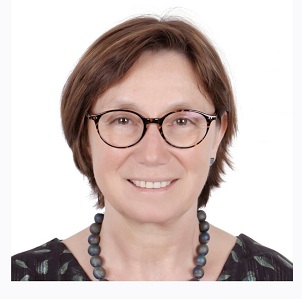
SVETLANA MINTOVA
Laboratory of Catalysis and Spectrochemistry (LCS), ENSICAEN, Normandy University, Caen, France
CNRS Director of Research (DR1)
INVITED SPEAKER
Svetlana Mintova obtained her PhD in Physical Chemistry from the Technological University of Sofia, Bulgaria.
Her research focuses on porous materials and physical chemistry, with expertise in the synthesis of zeolites, advanced characterization and their applications in catalysis, separation, chemical sensors, membranes, and biomedicine.
Her work is dedicated to the fundamental understanding of crystal growth processes of zeolites and the modification of their properties through direct and post-synthesis approaches.
She is internationally recognized for her pioneering contributions to nanosized zeolites.
Selected Awards
- 2025 — Knight of the National Order of Merit
- 2022 — ERC Advanced Grant
- 2019 — Shandong International Science Award
- 2016 — "Le Prix La Recherche Chimie"
- 2016 — Donald Breck Award (IZA)
- 2014 — Baron Axel Cronstedt Award (FEZA)
Invited Lecture
Synthesis and Applications of Pentasil Zeolites
RESEARCH FOCUS
- Functional inorganic & hybrid materials
- Soft chemistry approaches
- Autonomous synthetic materials
- Nanochemistry & optics
- Dynamic characterization of nanomaterials
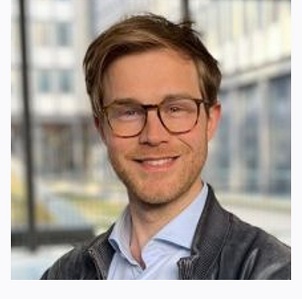
MARCO FAUSTINI
LCMCP — Laboratoire de Chimie de la Matière Condensée de Paris
Professor at Sorbonne Université
INVITED SPEAKER
His research focuses on the synthesis of functional inorganic and hybrid materials through soft chemistry approaches. He is particularly recognized for developing autonomous synthetic materials operating far from equilibrium, based on interconnected nanomaterial systems.
His work lies at the interface of nanochemistry, optics, and physical chemistry, combining self-assembly strategies with advanced lithographic techniques.
In parallel, he has developed dedicated spectroscopic platforms for the dynamic characterization of nanomaterials.
Invited Lecture
Designing self-regulating porous materials with internal feedback
RESEARCH FOCUS
- Porous materials & MOFs
- Catalysis and separation processes
- Sol-gel synthesis routes
- High-throughput approaches
- AI-assisted catalysis
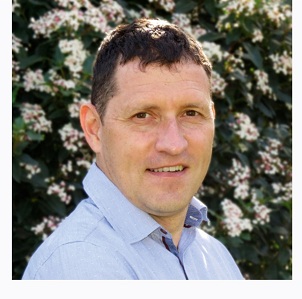
DAVID FARRUSSENG
IRCELYON — Institut de Recherches sur la Catalyse et l’Environnement de Lyon
CNRS Director of Research
INVITED SPEAKER
David Farrusseng obtained his PhD in Materials Science at the European Institute of Membranes (IEM) in Montpellier, France. He then joined the group of Prof. F. Schüth at the Max Planck Institute for Coal Research in Germany as a postdoctoral researcher.
In 2001, he was appointed CNRS researcher in the group of Dr. C. Mirodatos, where he contributed to the development of high-throughput approaches and artificial intelligence in catalysis.
He is currently group leader at IRCELYON and President of the International Association of Catalysis Societies (IACS). His research focuses on the design of materials for innovative catalytic and separation processes.
He is recognized as one of the pioneers in the design, up-scaling, and application of metal–organic frameworks (MOFs) in catalysis.
Professional Memberships & Awards
- President of the International Association of Catalysis Societies (IACS)
- Chairman of the 18th International Catalysis Conference (ICC)
- Silver Medal of CNRS
- Associate Editor of New Journal of Chemistry (RSC)
- IACS Award of the International Association of Catalysis Societies
- Member of the editorial committee of ChemCatChem (Wiley)
- DIVCAT Award from the French Chemical Society
Invited Lecture
Scalable Sol-Gel Route to Al-Based MOFs
RESEARCH FOCUS
- Ceramic & composite materials
- Additive manufacturing (3D printing)
- Membrane technologies
- CO₂ conversion & hydrogen production
- Biomaterials & tissue engineering
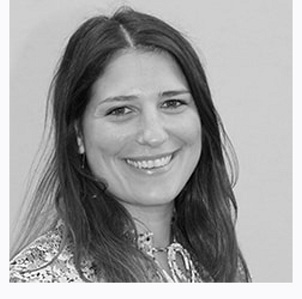
CHRYSTELLE SALAMEH
IEM — European Membrane Institute, Montpellier
Associate Professor, ENSCM – University of Montpellier
INVITED SPEAKER
After completing a Master’s internship at Sorbonne University on mesoporous materials for heterogeneous catalysis, Chrystelle pursued a PhD on functional non-oxide ceramic nitrides for hydrogen storage and production, supported by a Marie Curie fellowship.
She obtained her PhD from the University of Montpellier in 2014 and received two “Best PhD Thesis” awards from the French Ceramic Society (GFC) and the European Ceramic Society (ECERS).
Following postdoctoral research at Université Paris Cité and the Collège de France—focusing on surface functionalization for water harvesting and biomaterials for tissue engineering—she joined ENSCM as Associate Professor in 2017.
Her current research focuses on the development of ceramic and composite materials through additive manufacturing, including 3D printing of ceramics, membrane technologies for water treatment and desalination, catalysis for CO₂ conversion and hydrogen production, and biomaterials for tissue engineering.
Invited Lecture
Multi-scale functionalization of 3D-printed ceramic monoliths for advanced CO₂ hydrogenation
RESEARCH FOCUS
- Separation chemistry
- Selective metal extraction
- Rare earth elements & uranium
- Hydrometallurgy
- Sustainable solvents
GUILHEM ARRACHART
ICSM — Institut de Chimie Séparative de Marcoule
Associate Professor, University of Montpellier
INVITED SPEAKER
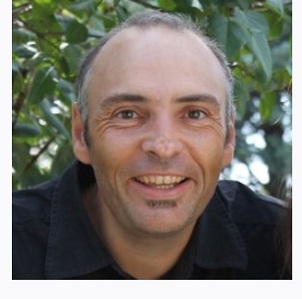
Guilhem Arrachart works in the field of separation chemistry, with a focus on the selective extraction of metals.
His research particularly addresses the separation, recycling, and purification of strategic metal ions, including rare earth elements and uranium.
His work also involves the development of innovative hydrometallurgical processes, including the design of sustainable solvent systems for resource processing.
Invited Lecture
Materials development as a tool for separative chemistry
